When Innovation Meets Craft. The Future of Sustainable Food.
Sustainable chocolate Thailand.
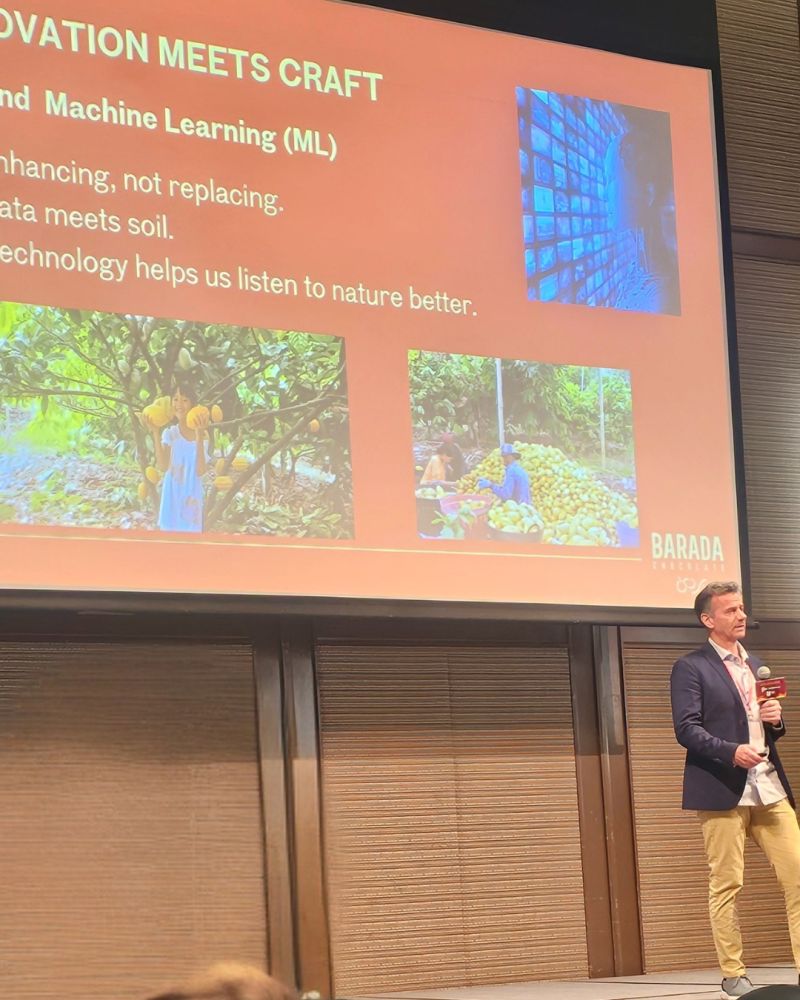
Earlier this year, BARADA Chocolate founder Khaled Shbib was invited to speak at the Food and Beverage Innovation Congress Thailand (FBIC) 2025, sharing a stage with global corporations, startups and innovators exploring how AI and machine learning can help shape a more sustainable future for the food industry.
This is what he said. And why it matters for every chocolate lover, every farmer, and every business that believes sustainability and profitability can coexist.
Sustainable Chocolate Thailand. When Food Looks Perfect but Tastes of Nothing.
The talk began with a personal memory. When Khaled first arrived in Europe, supermarkets looked like paradise. Tomatoes were shiny, perfectly red, perfectly round. Chocolates came in glossy wrappers. Everything looked perfect.
But when he tasted them, there was no life. The tomatoes were watery and bland. The chocolate was sweet but missing the depth, the soul, the flavour memory he had carried from home.
That observation became the foundation of everything BARADA stands for. Food today looks better but tastes worse. And the question driving BARADA is simple: what if we reversed that?
From IT Boardrooms to a Farm in France
After many years in the IT industry working for large global corporations, Khaled made a different choice when his children were born. He bought a small farm in the south of France. They grew organic vegetables, kept chickens, and rescued donkeys from the abattoir.
It was on that farm that a fundamental truth revealed itself. The ugly tomatoes from the garden tasted infinitely better than supermarket perfection. When you care for the environment, the environment cares for you. Nature does not just need protection. It needs respect.
Eighteen Years in the Making
Throughout his IT career, Khaled travelled across Africa and Asia, spending time with cacao farmers, watching how they grow, harvest, ferment and dry their beans, often under rules set by large corporations. His craving for real chocolate kept growing.
So he began experimenting. Buying beans, roasting them at home, making chocolate in his kitchen. For 18 years he refined the recipe, sharing it with colleagues, friends and family, gradually rediscovering the lost flavour memory from his childhood.
Four years ago, he left IT and founded BARADA Chocolate in Phuket. His technology background became his secret ingredient. Today, BARADA produces award-winning chocolate that is not only delicious but ethical, sustainable and environmentally respectful.
Four Ideas That Will Shape the Future of Food
At FBIC 2025, Khaled shared four ideas he believes will define the future of the food industry.
1. AI and Machine Learning in Harmony with Nature
With AI and machine learning, we can now identify good insects from bad, targeting harmful ones instead of spraying poisons that kill everything. The result is healthier soil, healthier plants and healthier people. But there is a business truth here too. This is not just good ethics. It is good economics. With cleaner supply chains come stronger brands, higher consumer trust and better margins. Sustainability is not a cost. It is a competitive advantage.
2. Traceability as Storytelling
Consumers today want to know where their food came from and who grew it. Technology now allows us to trace each chocolate bar back to its farm, its soil, its farmer. That is not just accountability. It is storytelling. And stories build brands. At BARADA, every bar of chocolate can be traced back to the small family farms in Thailand where the cacao was grown, the farmers who tended it, and the standards we hold ourselves to.
3. Farmers Are the Real Heroes
Chefs and brands often get the spotlight. But the real heroes are the farmers. Without them, there is no food, no clothes, no chocolate. At BARADA, we work directly with small family farms. Not because it is charitable, but because small farms are resilient, high-quality, and aligned with modern consumer values. We pay every farmer their full asking price, and sometimes more. We send them finished BARADA chocolate so they can taste what their cacao becomes. Supporting farmers is not charity. It is smart business.
4. The Environment Is Not Out There. It Is Us.
We often talk about the environment as if it is something separate from us. It is not. The pesticides we spray, we eat. The plastics we throw, we drink. The air we pollute, we breathe. Caring for the environment is caring for ourselves. And the businesses that understand this will be the ones that thrive in the future economy.
At BARADA, this is not a philosophy. It is operational reality. Our Cacao Husk Tea is made from husks that would otherwise be discarded. Some of our packaging is made from dried cacao pods. Nothing goes to waste.
The Future of Profitable, Meaningful Brands
The future of food is not about shiny packaging or artificial perfection. It is about authenticity, respect for nature, empowerment of farmers, transparency and traceability. The future of profitable, meaningful brands lies in implementing a strategy where AI, machine learning, sustainability and community farming are at the core of business.
BARADA Chocolate was built on exactly that belief. And every bar we make is proof that it works.
Winner of the South East Asia Business Awards 2025 and 2026 by APAC Insider. Winner of Best Vegan Chocolate Manufacturer 2023, Thailand by LUX Life Magazine. Featured in Prestige Magazine Thailand and TasteAtlas.